
What the Danes could learn from the British election
(Originally appeared in Danish in Politiken, 29 June)

Since 2016, the Danish media have published many obituaries of my homeland, Great Britain.
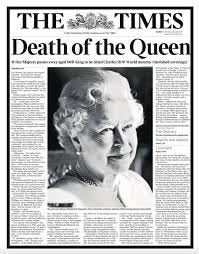
The latest was by Mathias Sindberg, a journalist at a limited circulation newsletter called Dagbladet Information (no, I don’t know it either): ’Hvem Slog Storbritannien ihjel?’ (‘Who Murdered Great Britain?’) was the headline, below which he likened poverty levels in Britain today to the time of Charles Dickens. But in Dickens’ day they had workhouses - places where the poor could do an honest day’s work in order to keep a roof over their heads and their bellies full. We don’t have those any more, so things are considerably worse.
But let’s look at the bright side. On July 4th, the world’s oldest democracy (if we ignore Athens), has an opportunity to get rid of its current government, this absolute shower of charlatans, crooks and whatever Liz Truss is, and put Sir Keir Starmer in No 10 Downing Street for the next five years. And this time round, unlike in Dickens’ time, even the poor get to vote!
But will British democracy function properly? I am aware that the Danes believe that they do democracy best, that the rest of us are little better than banana republics and that, contrary to Jante Lov (The Law of Jante), you believe you have much you can teach us.
Well, I watched the recent EU election here with interest. I even sat through the interminable leader debates on TV. I have watched the coverage of Folkemødet (the annual Bornholm political festival) recently too. And I have a few suggestions. Four things that the Danes could learn from the Brits about democracy.
Character
When I say ‘character’, I don’t mean ‘good character’. I am not referring to men and women who are honest, able and genuinely believe in public service, like Bertel Haarder or Margrethe Vestager.
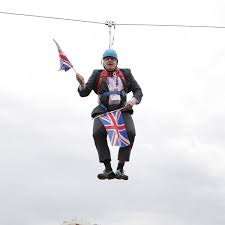
No, I mean weird, odd, creepy and, simply, mad people. ‘What a character!’ We say when a member of the House of Lords falls asleep with his trousers around his ankles during a debate, for instance. Or when Conservative member of parliament Michael Fabricant insists on wearing his pet Chihuahua on his head. Or when Boris Johnson and his genitals are suspended before the world’s press by a malfunctioning zip-wire.

Now that’s entertainment! That gets people interested in politics!
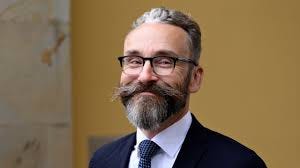
There are simply not enough characters in Danish politics: Ole Birk Olsen tries, but styling yourself like the last surviving member of the Romanovs is not enough to make yourself a ‘character’. And neither is ‘drinking lots of Diet Coke’.
No wonder your turnout at elections is so low.
Participation
Of course that was me being ironic. Danes turn out in vast numbers for elections. And that is part of your problem.
64,78% of you voted in the recent EU election among Danish voters. That is nearly twice the level of participation in the UK the last time we voted in an EU election in 2019, and the highest level in Denmark since 1979.
Well done Danes? Not so fast. Do we actually want so many people to vote? It is a common misconception that the more people vote, the better for democracy, but there is also much to be said for a low turnout.
One of the reasons Britains is experiencing its (hopefully temporary) difficulties is that, in 2016, a large number of people who had never voted, and probably struggled to write an ‘x’ on the ballot paper, were persuaded to do so by misleading social media campaigns.
I can say this because I am not a politician, but essentially lots and lots of really stupid people were persuaded to vote ‘Leave’ by a tsunami of Facebook lies, including: if we stay in the EU, 50 million Turkish people will move to Tunbridge Wells; but if we leave the EU, the NHS will get GBP350m extra a week and it will be like WWII all over again but in a good way!
Simplicity
I felt privileged and excited to be able to cast my vote in the recent EU election here in Denmark. I walked in the June rain to the polling station with my photo I.D. But picture my confusion when I was presented with a voting slip the length of a roll of wallpaper, with dozens of options, not just for different parties, but for different candidates. What on earth is that all about? How should I know if Ida Social Democrat is better than Morten Social Democrat? Why should I even care?
It was like some kind of fiendish escape room challenge. In Britain, we reduce voting to the kind of experiment scientists do with pigeons: tap a red button to get some seeds, tap the blue to get an electric shock.
Argy-bargy
I have been to Folkemødet a couple of times and it was lovely. Far too lovely. Far too hyggelige.
Danish politics could do with a bit more argy-bargy - or conflict, bitterness, recrimination, vengeance and anger.
Yes, you have too many parties, and too many politicians but that wouldn’t be so much of a problem if, just occasionally, they disagreed with each other.
Can you, for instance, match the following rhetoric to the party leader?
We want the public sector to be more efficient.
We want to promote biodiversity.
We want to incentivise hard work.
We believe the green transition can be an economic win for Denmark.
Immigrants must contribute to Danish society.
We will reduce crime.
We want to create a fairer Denmark.
Defence is a priority.
Education is a priority.
Health is a priority.
Any one of them could said any of these.
Imagine how much more refreshing it would have been if the leaders said what they really meant. Vanopslagh: ‘Public sector workers are all lazy spongers.’ Dragsted: ‘Company owners are all greedy swindlers’. Støjberg: ‘Don’t ask me about health or the economy or education or defence. I have no idea!’ Venstre guy: ‘Can I please go home?’
Brits, on the other hand, have a clear idea of what we will get when we vote for a particular party.
Vote Conservative and, if you are already rich, you will get richer as long as you don’t mind that we get massively more rich by selling off publicly owned assets and public service contracts to our friends who will pollute your water, ruin your trains, maximise profits on energy, and bring the health service to its knees while enriching private healthcare providers. We will undermine the BBC so that it platforms demagogues in a misguided attempt to demonstrate ‘balance’, and ensure that our friendly media barons enjoy ongoing tax advantages so that they can continue to shower their sewer of lies upon readers while living in Monaco. And we will encourage Middle Eastern dictatorships to buy up all the football clubs. Money launderers welcome!
Vote Labour, and things will become marginally better for everyone.
Rumours of Britain’s death have been exaggerated. Perhaps if the unthinkable should happen on July 4th and the Conservatives are returned to power, then we can start writing those eulogies. After all, as George Bernard Shaw’s said: ‘Democracy is a device that ensures we shall be governed no better than we deserve’. But I have a strong feeling we are about to see a British renaissance. That’s what I’ll be voting for.
END